
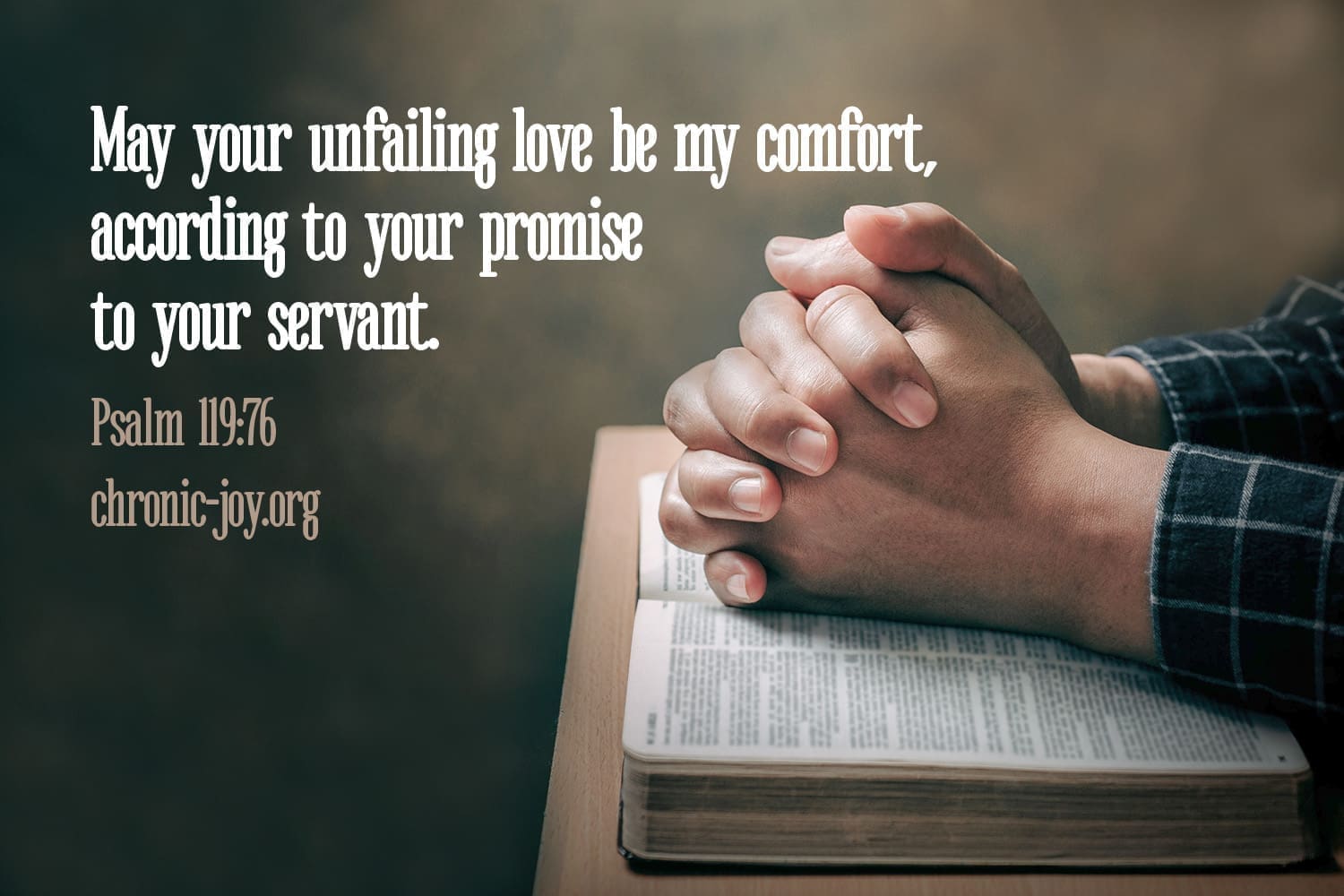
May your unfailing love be my comfort, according to your promise to your servant. (Psalm 119:76)
INSIGHTS ABOUT GRIEF
Losing your health is a significant event. It’s natural to feel sad, angry, disappointed, or any number of emotions. When you lose the ability to work, engage in social activities, participate in service projects, attend church every week, or take care of yourself, it’s normal to grieve. Give yourself time to process what has happened, explore ways to cope, learn to manage, and look for meaning moving forward.
Grief is an individual experience. There are as many ways to grieve as there are people, and there is no set way or timeline to follow.
It’s okay if you struggle to believe this has happened to you. You’ve experienced a huge loss that has likely hindered or interrupted your plans and stolen your dreams. It’s a lot to process. Also, there’s no right or wrong way to feel about getting sick. Whether you feel anger, depression, frustration, or any other emotion, acknowledge your feelings, whatever they are, and be patient as you face your loss and navigate a life you hadn’t expected.
If you became sick as a child, teen, or young adult, perhaps you didn’t get the opportunity to learn to drive, go to college, move out on your own, launch a career, or start a family. Grieving isn’t only for what you had and then lost. It’s also for what you didn’t experience. It’s normal to grieve what could have been.
As you experience changes to your health, experience new symptoms, or if your health continues to decline, it’s normal to grieve again. This does not mean you’re doing it wrong. It simply means there is more grief work to do.
HELFUL TIPS
- SEE YOUR SITUATION FOR WHAT IT IS. You don’t need to downplay (or exaggerate) what you’re experiencing. Just be honest about your situation and candid about your thoughts and feelings. If you have nothing positive to say, that’s okay. Start from a place of honesty and go from there.
- REMEMBER THAT ILLNESS DOESN’T DEFINE YOU. It may have turned your life upside down or stolen your independence, but you still have worth and value. Nothing can take that away.
- YOU MAY GRIEVE THE LOSS OF RELATIONSHIPS. People in your life may not be supportive. It's natural to grieve whether you lose your closeness with them or lose them entirely.
- QUESTIONS MAY BE UNANSWERED. Questions are an important part of the process, though they may remain unanswered. Focus on what you know, treat your body well, and be open to how your faith grows and deepens in this situation.
- WORK TOWARD ACCEPTANCE. Acceptance doesn’t mean giving in, stopping trying, or no longer hoping for better treatment options. It means acknowledging the illness, accepting how life has changed, and recognizing that it may be permanent. It also means learning to cope and continue.
- IDENTIFY WHAT COMFORTS AND HEALS YOU. This may be Scripture, prayer, music, or something warm and soothing. When you’re struggling, focus on what comforts you and bask in whatever feels healing.
INSIGHTS ABOUT MOVING FORWARD
- Even though your body may not be as strong as it used to be, you are strong in other ways. Try to develop your other strengths.
- Search for new meaning in life. It may look different than what you imagined, but it can be meaningful and something that matters. You can still make a difference in this world.
- Accept and process your emotions as they come, be patient with yourself as you grieve all you’ve lost, and be honest with the Lord about how you feel. Grief is a process. You may find yourself up, down, and all over the place, and that’s okay. Cling to the Lord. Ask Him to steady and strengthen you, and remember that this is not the end. The Lord has good things in mind for you. Rest in Him as you watch for what He has in store.
AN INVITATION
For more on the topic, see our Grief page and the printable, Sorrow, Lament, & Grief.


Laurie Glass
Laurie holds a master's degree in Christian counseling and is the author of Coping with ME/CFS and Expressing Your Grief: Through Poems and Prayers. Many of her poems and articles have appeared in print and online. In 2019, she won the Open Medicine Foundation poetry contest. Laurie loves using her writing to encourage others.
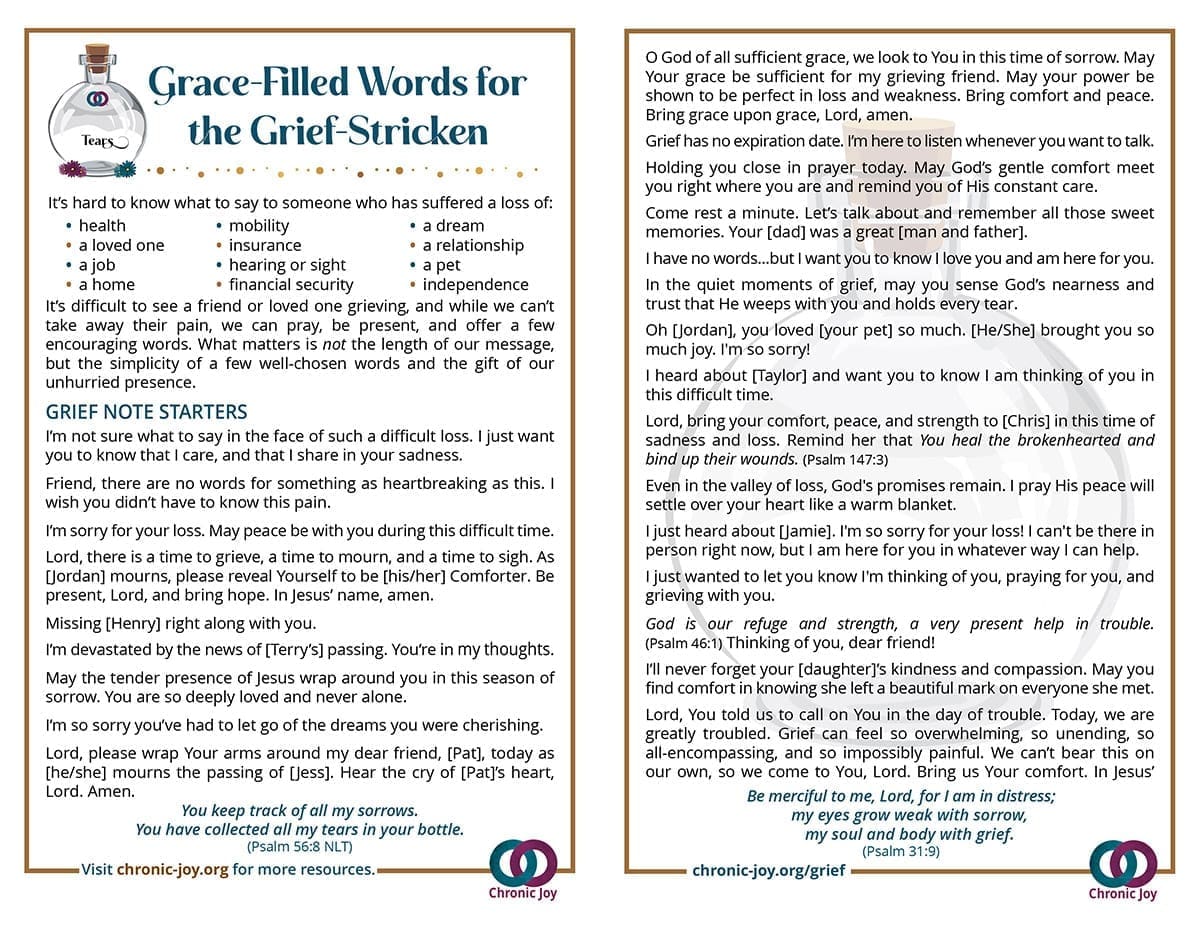
Grace-Filled Words for the Grief-Stricken
It’s hard to know what to say to someone who has suffered a loss. What matters is not the length of our message, but the simplicity of a few well-chosen words.
Recent Comments