
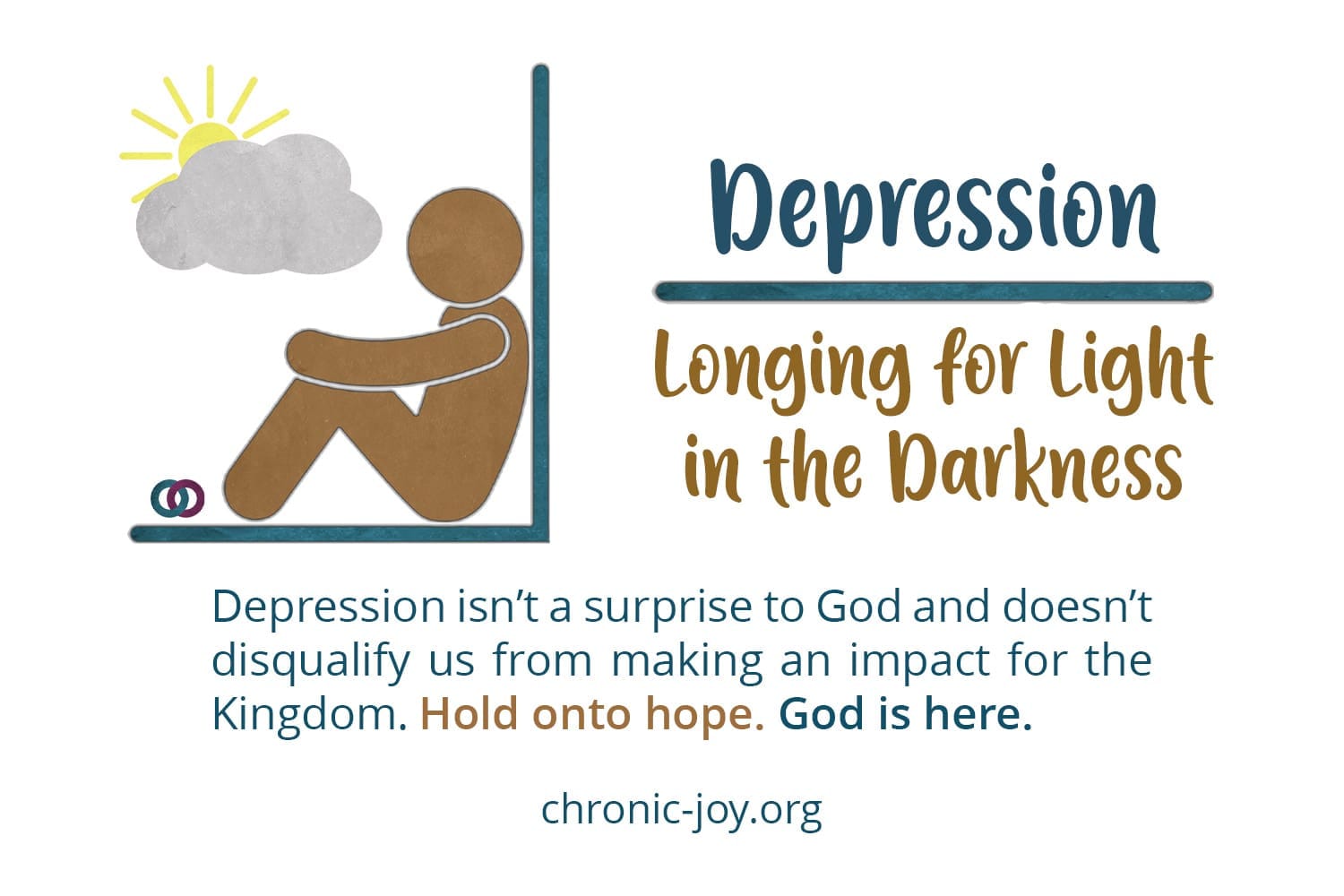
Depression
Longing for light in the darkness.
Depression isn’t a surprise to God and doesn’t disqualify us from making an impact for the Kingdom. Hold onto hope. God is here.
…although I dwell in darkness, the LORD is my light. (Micah 7:8)
Envelope of Hope
REQUEST your free depression resources.
📬 U.S. residents only. Limit one.
IN THE DARKNESS OF DEPRESSION
In the darkness of depression, God is with us even when we cannot feel Him. Certainly, these twelve words from Micah 7:8 are truth we can speak to our hearts when despair eclipses the light: Though I sit in darkness, the LORD is a light for me.
UNLESS YOU GO THROUGH IT YOU DON’T UNDERSTAND DEPRESSION
Michael Wilkes writes, “I thought I knew enough about depression as a pastor seeking to minister to those who had walked through it. I thought I understood their battle. Honestly, I did not have a clue, and to everyone who might read this (unless you have gone through the dark valley personally), you will never fully know what that person is feeling. … Depression isn’t something that jumps on you like a mountain lion in the woods; it is more like an anaconda that slowly chokes the life out of you.”
Symptoms of Depression
- Feeling sad, tearful, empty, or hopeless
- Angry outbursts, irritability, or frustration over even small matters
- Loss of interest or pleasure in normal activities, including intimacy, hobbies, and sports
- Changes in sleep (insomnia or sleeping too much)
- Exhaustion, a fatigue that knocks you off your feet, requiring extra effort for even small tasks
- Decreased appetite and weight loss — or increased appetite and weight gain
- Anxiety, agitation, or restlessness
- Thinking, speaking, or moving slowly
- Feeling worthless or guilty, stuck on self-blame or past failures
- Having trouble thinking, concentrating, making decisions, or remembering things
- Thoughts of death, including suicidal thoughts or attempts
- Physical symptoms such as chest pain, back pain, stomachaches, joint pain, or headaches
HOW PEOPLE DESCRIBE DEPRESSION
- “I feel like I’m walking underwater.”
- “There is a pane of glass between me and everyone else.”
- “Everything seems like it is going in slow motion.”
- “It’s a black hole.”
- “I feel like I’m suffocating and can’t breathe.”
- I’m numb. I don’t feel anything at all.”
- “Everything is gloomy, dark, and lonely.”
- “Depression can feel like a thick fog that clouds your mind, saps your energy, and distorts your reality, so you can no longer see anything good.”
DEPRESSION, LIKE OTHER ILLNESSES, MAY NOT BE HEALED IN THIS LIFE
“Grace relieves but does not always cure depression … Just as a man with asthma or a woman born mute will likely remain this way even though they love Jesus, so our mental disorders and melancholy inclinations often remain with us, too. Conversion to Jesus isn’t heaven, but it’s foretaste. Though substantive healing can come, often it waits till heaven to complete its full work.” (Zack Eswine, Spurgeon’s Sorrows)
“Depression is an illness that affects every part of you – body, mind, and soul.” (Heather MacLaren Johnson, Psy. D.)
When the Darkness of Depression Descends
REMEMBER WHO YOU ARE
You are a child of the Light of the world, a masterpiece created by God for His own great glory. When you cannot feel His Presence, stand on the truth of those who have gone before you: King David, Ruth, Jeremiah, David Brainerd, Charles Spurgeon, and Mother Teresa — and know that in spite of the depression, in the midst of the darkness, maybe even because of the anguish, God is using you and your story.
For God’s invitation is: “Come to me, all you who are weary and burdened, and I will give you rest.” (Matthew 11:28)
God is with us in every situation, circumstance, heartbeat, and breath. We are not alone. Ever.
COMMON MISCONCEPTIONS ABOUT DEPRESSION
There are many misconceptions about depression, but a few are of special significance to Christians.
1. DEPRESSION IS CAUSED BY UNCONFESSED SIN
What is true?
- Studies on mental illness, which include depression, reveal a frequent connection to family history, and approximately 40% of diagnoses are due to genetics rather than external triggers or sinful choices.
- Chronic illness (such as diabetes, thyroid disease, and multiple sclerosis) increases the risk of depression. For many, depression is no more the result of personal sin than a birth defect, cancer, or the flu.
- Godly men and women in the Bible experienced depression. We consider many of these people heroes of the faith. Their laments reveal their strong and abiding faith in God in the midst of anguish and despair.
MENTAL ILLNESS IS A REAL ILLNESS LIKE OTHER PHYSICAL ILLNESSES
David Murray, author of Christians Get Depressed Too, writes, “We would never take this view (sinful cause/spiritual solution) when counseling people with cancer, strokes, broken legs, diabetes or Alzheimer’s. My default position is that physical problems are most likely the result of living as fallen creatures in a fallen world. Why should our default position with brain problems be any different? Are we saying that the brain, the most complex organ in our body, is somehow exempt from the effects of the Fall? Why should we always conclude that brain disorders are the result of personal sin?”
Charles Spurgeon said, “No sin is necessarily connected with sorrow of heart, for Jesus Christ our Lord once said, ‘My soul is exceedingly sorrowful, even to death.’ There was no sin in him, and consequently none in his deep depression.”
2. DEPRESSION IS THE RESULT OF WEAK FAITH
What is true?
- Reputable studies link depression to physical and biological causes
- Many heroes of the faith, including Martin Luther, David Brainerd, and Charles Spurgeon, bore exceptional fruit in the midst of, or maybe because of, their deep depression.
“I was so overborne with discouragement that I despaired of doing any good, and was driven to my wit’s-end; I knew nothing of what to say, nor what course to take. But at last I insisted on the evidence we have of the truth of Christianity … in some measure, and somewhat encouraged to find that God enabled me to be faithful once more.” (David Brainerd)
3. MEDICATION EXHIBITS A LACK OF FAITH IN GOD’S ABILITY TO HEAL
What is true?
“It is a dangerous and damaging misunderstanding that often leads people, especially Christians, to view medication as a rejection of God and His grace rather than a provision of God and His grace.” David Murray, Christians Get Depressed, Too
For someone suffering from severe, recurring depression, anti-depressants are no different than medications for thyroid disease, bleeding disorders, or asthma.
“Grace relieves but does not always cure depression … Just as a man with asthma or a woman born mute will likely remain this way even though they love Jesus, so our mental disorders and melancholy inclinations often remain with us, too. Conversion to Jesus isn’t heaven, but it is foretaste. Though substantive healing can come, it often waits till heaven to complete its full work.” Zack Eswine, Spurgeon’s Sorrows
THE MOST IMPORTANT THINGS TO REMEMBER
You matter.
God is here, present in every moment, every heartbeat, and every breath. He always graciously gives us enough light for the very next step.
We long for light in the darkness — and the Light of the world is here, Immanuel, “God with us.”
Joy is here too, tucked into every difficult, numb, overwhelming, and aching moment of darkness, just waiting to be discovered.
Lastly, Sarah Robinson writes, “[God] isn’t afraid of my depression. He doesn’t shrink from the darkness. God doesn’t lose patience with my pain.”
FREE PRINTABLES

Depression Self-Care Action Plan
Depression can make it difficult to practice healthy self-care. Building an Action Plan gives you quick, doable steps each day.
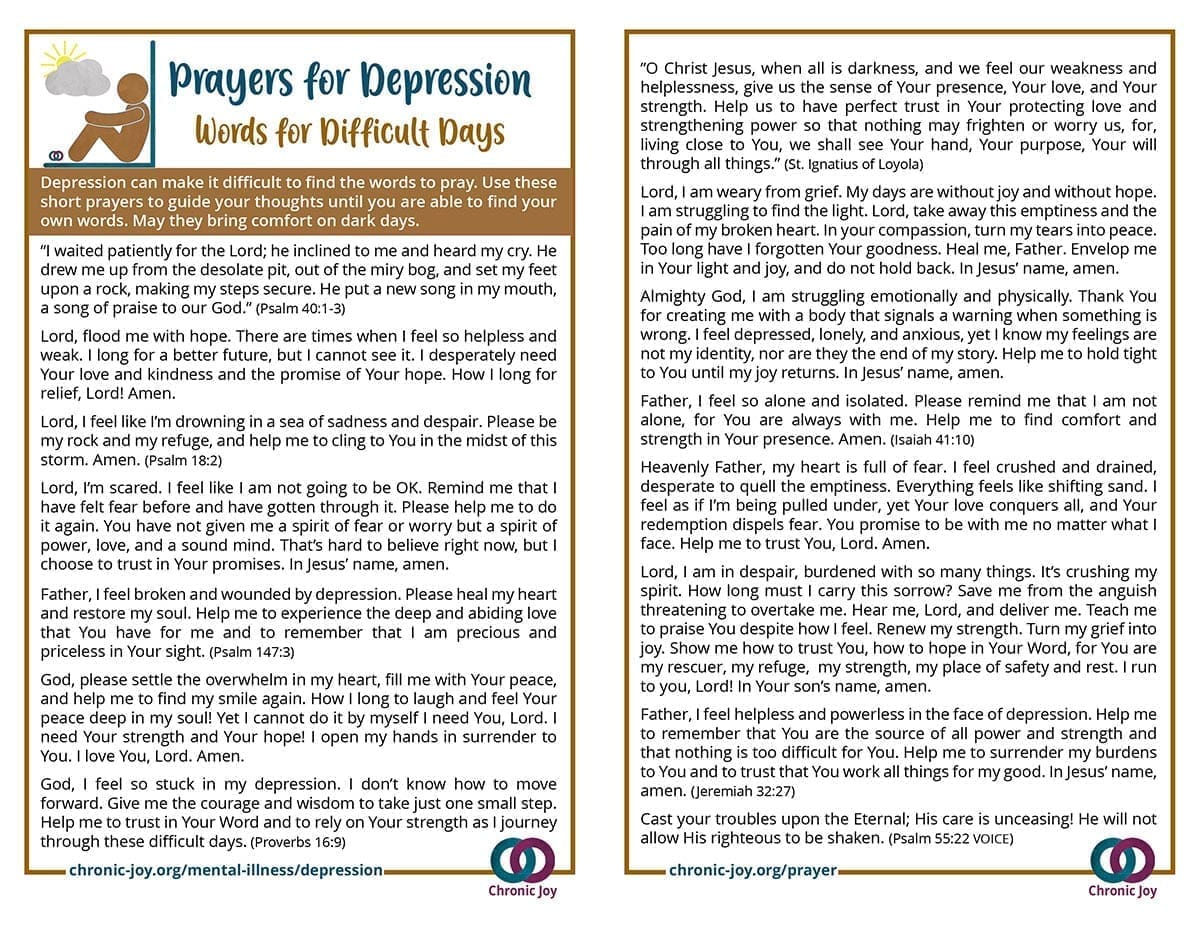
Prayers for Depression
Depression can make it difficult to find the words to pray. Use these short prayers to guide your thoughts until you are able to find your own. May they bring comfort on dark days.
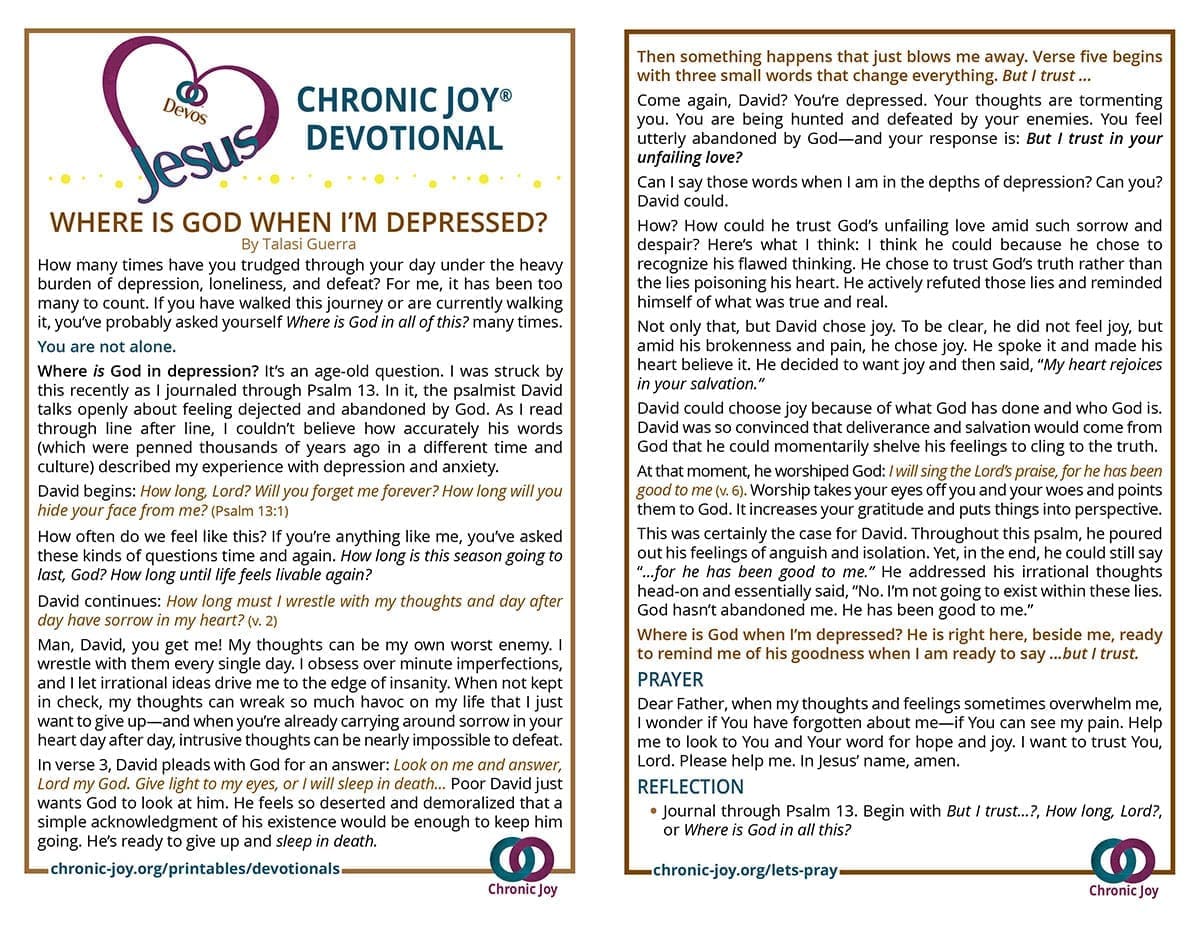
Where is God When I’m Depressed?
Come again, David? You’re depressed, tormented by thoughts, and feel abandoned by God—and you say, But I trust in your unfailing love?
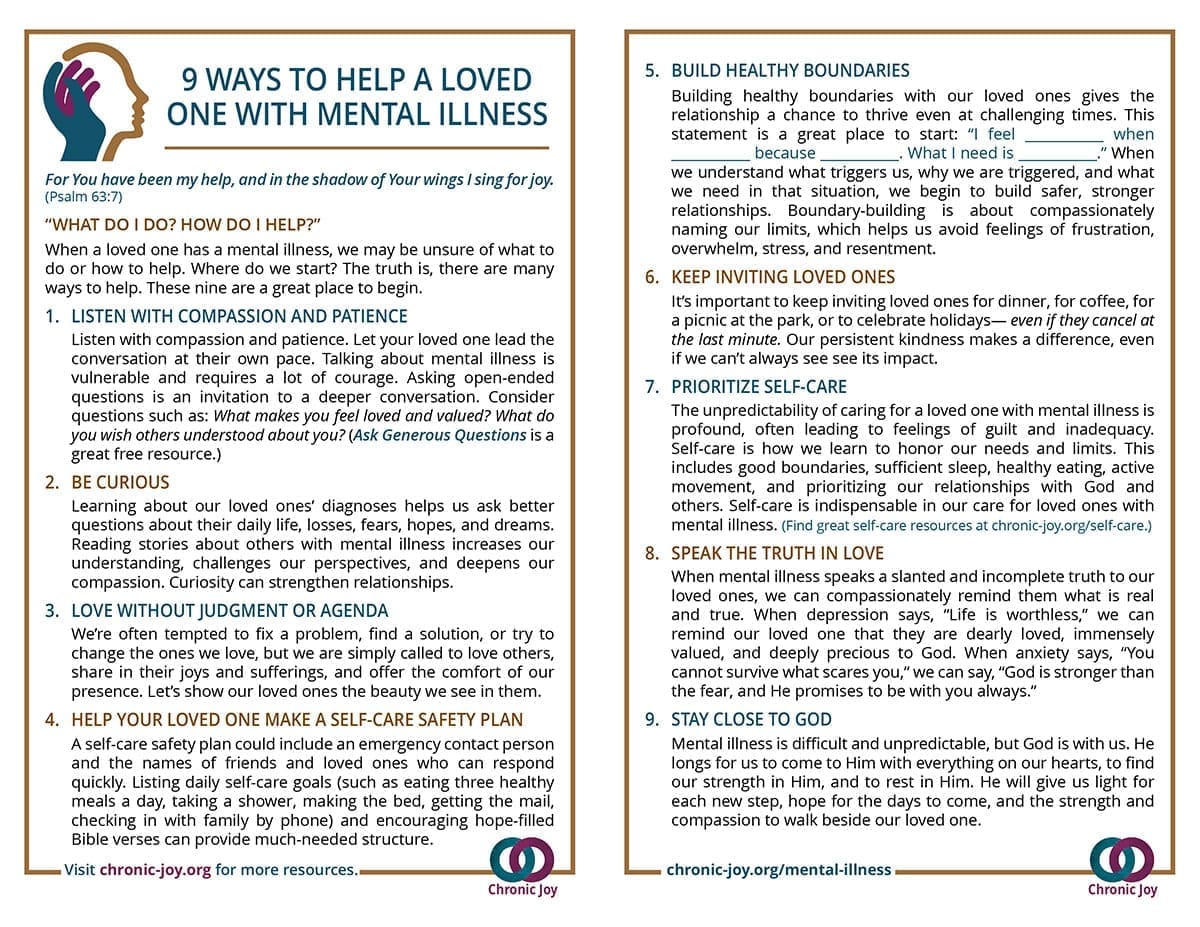
9 Ways to Help A Loved One With Mental Illness
“What do I do? How do I help?” When a loved one has a mental illness, we may be unsure of what to do or how to help. Where do we start? The truth is, there are many ways to help. These seven are a great place to begin.
POSTS

Praying Together when your Loved One has Depression
They began to pray together again — because she asked him to. The darkness didn’t feel quite so lonely anymore When you pray with someone, Jesus comes and stands in the gap between you and joins his heart with both of yours.

Choose Love: Loving Someone with Depression
Choose love when your heart feels least like doing so. Choose love. Get to know your heart intimately and let love be the antidote to every bit of ugly that beats through it.

From Darkness into Light: Choosing to Trust
She resolves to let beauty be that spark. Whenever the dark threatens, this is where she will go — from darkness into beauty and light.
BOOKS WE LOVE
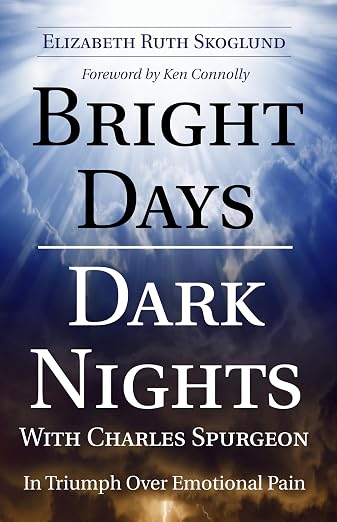
Bright Days Dark Nights With Charles Spurgeon: In Triumph Over Emotional Pain
Elizabeth Ruth Skoglund
Millions read the words of the great nineteenth-century preacher Charles Spurgeon without knowing that his ministry succeeded during the seasons of overwhelming emotional pain and deep depression this great man of God encountered.
Spurgeon confronted emotional problems with an acceptance based on physical, emotional, and spiritual causes and cures.


Christians Get Depressed Too: Hope and Help for Depressed People
David P. Murray
Many Christians mistakenly believe that true Christians don’t get depressed, and this misconception heaps additional pain and guilt onto those who are suffering from mental and emotional distress. The author exposes misconceptions some Christians have about the causes and treatments of depression.
Readers discover that depression is a complex problem that defies superficial answers and provides help and hope to those suffering from depression, caregivers, pastors, and churches.

Companions in the Darkness: Seven Saints Who Struggled with Depression and Doubt
Diana Gruver
The depressed have often been ostracized or institutionalized. But looking back in church history we find others who are companions in the darkness. They include some of our most beloved saints – Martin Luther, Charles Spurgeon, Mother Teresa, and Martin Luther King Jr. The author tells their stories in fresh ways and offers a wealth of practical wisdom for those in the darkness and those caring for them.

Hope Prevails: Insights from a Doctor’s Personal Journey through Depression
Michelle Bengtson
Dr. Bengtson writes with deep compassion, blending her training and faith, to offer readers hope grounded in God’s love and grace. She helps readers understand what depression is, how it affects them spiritually, and what, by God’s grace, it cannot do. The result is an approach that offers the hope of release, not just the management of symptoms. For those who struggle with depression and those who want to help them, discover hope for the future.
The Amazon buttons are affiliate links, which means if you click on the link and purchase the item, Chronic Joy will receive an affiliate commission.