Metaphors
A Bridge Between Pain & Understanding
Describing pain to someone who hasn’t experienced it is often challenging. Using metaphors can bridge the chasm, reframe our thoughts, and invite deeper understanding.
METAPHORS
Metaphors spark new understanding by helping us express the difficult parts of our stories in more easily accessible ways. They help us explain a situation with which others may have little or no experience.
Scripture provides rich narratives of suffering from Job to Jonah, Jeremiah, and the Psalms. The Bible uses comparisons (metaphors and similes) to give the suffering a language to express how they feel (Dr. Terry Powell). These Biblical metaphors offer us space to grieve. They don’t force [us] to cover every detail or angle of suffering. They allow for nuance and difference. And metaphors require further thought and exploration. (Zack Eswine)
For the word of God is alive and active. Sharper than any double-edged sword, it penetrates even to dividing soul and spirit, joys and marrow; it judges the thoughts and attitudes of the heart. (Hebrews 4:12)
PAIN AND METAPHOR
If we are hurting, it may be very challenging to answer the question, “How are you today?” Pain resists both language and silence, incapacitates language, and demands expression. It destroys, and it invents. Poet Anne Boyer describes it this way: What we see of pain is inadequate to what we know…
Writing our pain in metaphor gives us a tool to describe that pain to someone who hasn’t experienced it (For example, author Katharine Loring writes: I am being ground slowly on the grim grindstone of physical pain.). Most importantly, metaphor helps us to reframe our pain. “…people in pain are often highly creative in expressing their suffering…” (Joanna Bourke). Creatively using metaphor helps us not just to describe our pain, but illuminate it, inviting us to explore the enormity of pain—or a single poignant moment. In all its different forms, Pain is both absolutely unique and infinitely shareable. (Joanna Bourke)
PAIN HAS AN ELEMENT OF BLANK
(Emily Dickinson, 1924)
Pain has an element of blank;
It cannot recollect
When it began, or if there was
A time when it was not.
It has no future but itself,
Its infinite realms contain
It's past, enlightened to perceive
New periods of pain.
QUESTIONS FOR REFLECTION
- What spoke to or surprised you in Emily Dickinson’s experience of pain?
- Is her experience similar to or different from yours?
- Do her words change how you think about the experience of being in pain?
FREE PRINTABLES
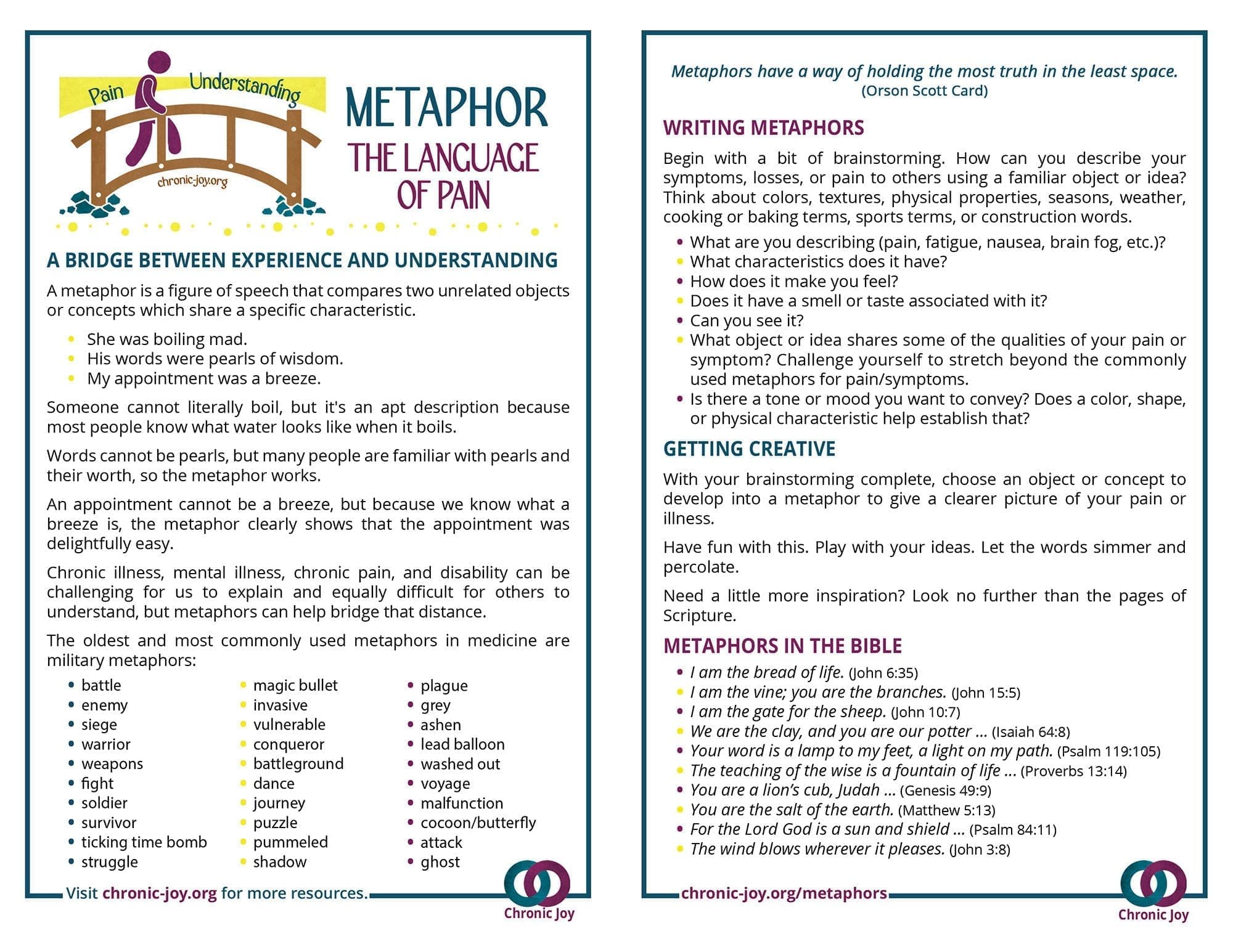
Metaphor • The Language of Pain
Chronic illness, mental illness, chronic pain, and disability can be challenging for us to explain and equally difficult for others to understand, but metaphor can help bridge that distance.
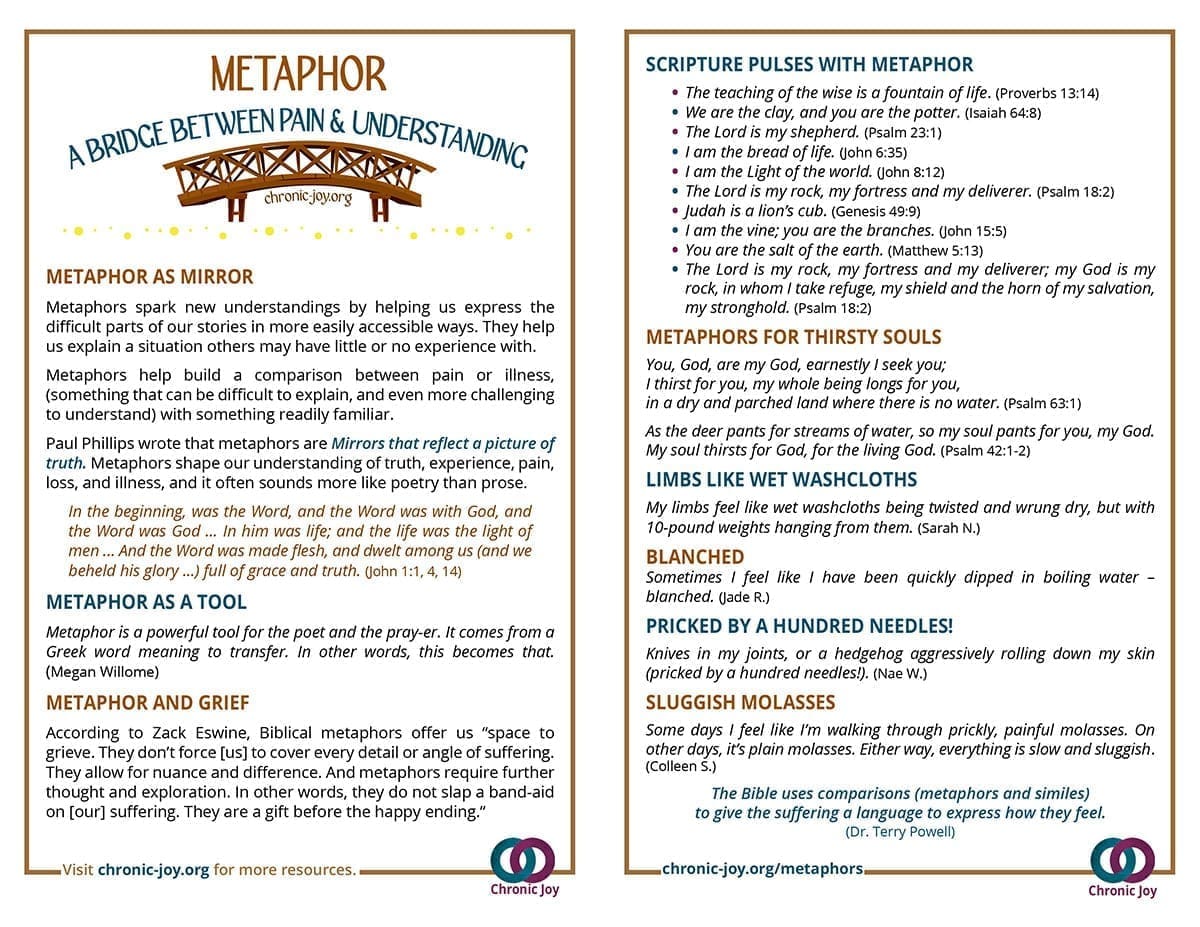
Metaphor • A Bridge Between Pain & Understanding
Metaphors spark new understandings by helping us express the difficult parts of our stories in more easily accessible ways. They also help us explain a situation with which others may have little or no experience.
POSTS TO PONDER
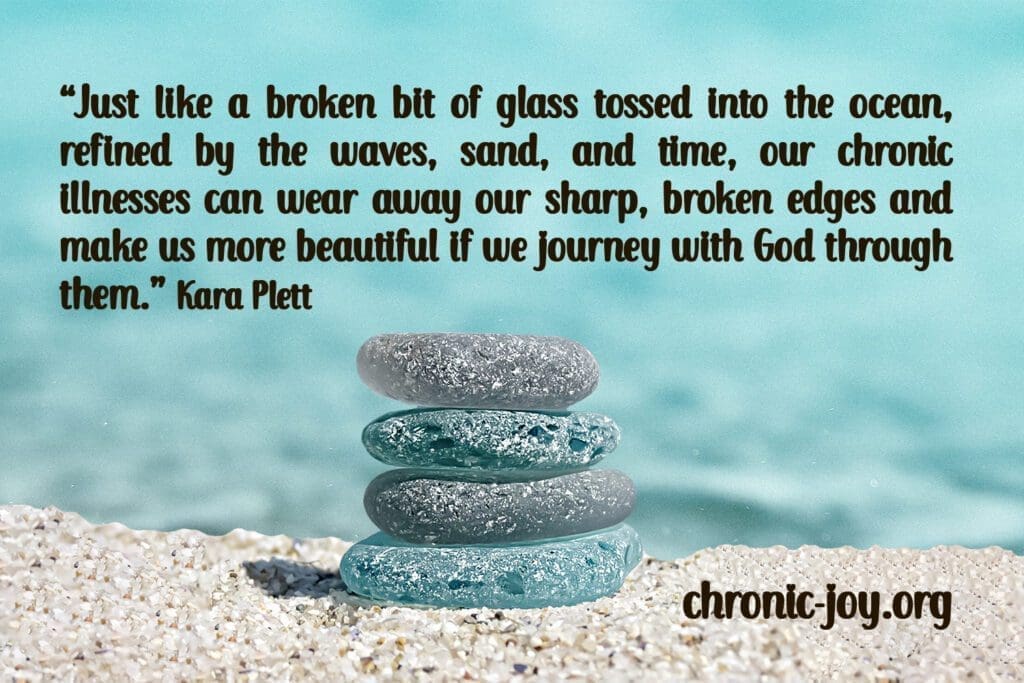
Metaphors Help Others Understand Illness
Have you ever struggled to explain how you’re feeling? What if we could use metaphors to help others understand how we are truly feeling?
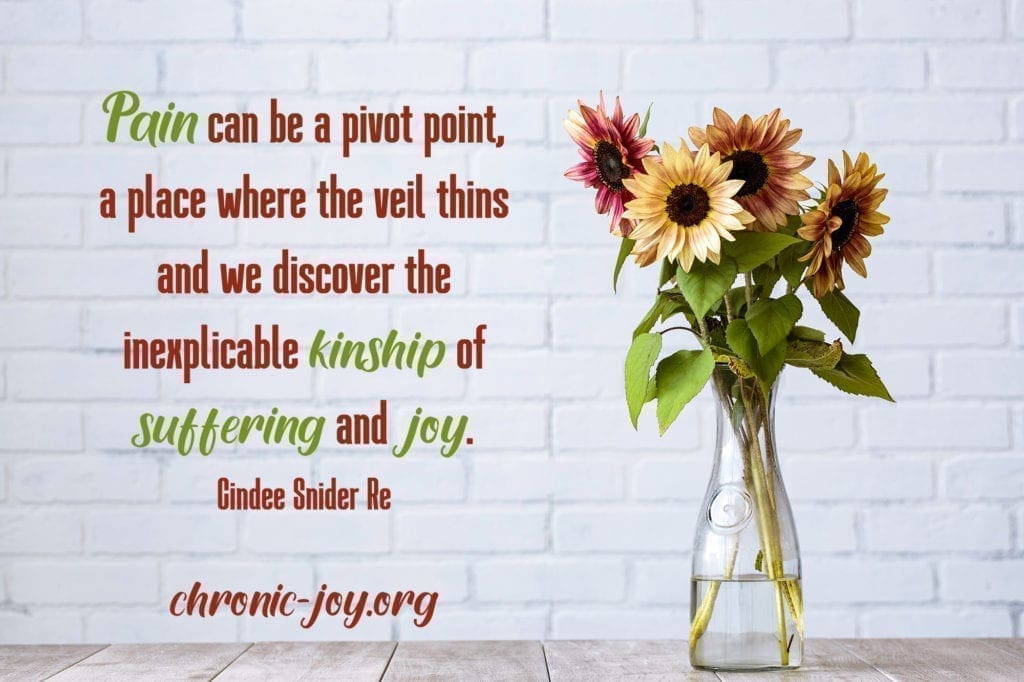
The Gift of Pain (A Poem)
Pain can be a pivot point, a place where the veil thins and we discover the inexplicable kinship of suffering and joy.