
The Lord is close to the brokenhearted and saves those who are crushed in spirit. (Psalm 34:18)
BROKENHEARTED OVER ILLNESS
At first, I was numb. Illness had already broken my heart so many times that I didn’t react; it had stolen so much, so deeply, that my emotions no longer registered the newest blows:
- time
- normalcy
- abilities
- naivete
- innocence
- freedom
- dignity
- ease
- school
- home
- relationships
Instead, I comforted my sister as she sobbed on the couch, trying to process her own emotions about the whole thing. I listened as my brother expressed his heart about it.
Hours later, the tears finally came. With the household asleep, I sat inside my walk-in closet with the door closed and sobbed…and sobbed…and dried my tears…and sobbed again.
Grieving is something that every chronic illness warrior has to go through at one point or another. It took three years of being sick before I began to grieve fully, and I’m not sure I’ll ever be done grieving what I’ve lost. We do need to grieve because so much has been stolen from us.
GRIEVING IN CHRONIC ILLNESS
Through my chronic illness battles, I have learned three truths to remember when grieving what chronic illness has stolen:
1. Know that it’s right to grieve.
I never knew that grieving would feel so wrong. It brings up emotions (like deep-seated anger and fear) that don’t seem right. Grieving isn’t reserved just for when someone dies; grieving is also for when something dies—like parts of our heart, dreams for our future, abilities, or our past selves. It is right for us to grieve. It’s human to be afraid. It’s right to be angry about sin and its consequences (including suffering and chronic illness).
2. It’s okay if you don’t fully understand your grief or its effects.
Grief often doesn’t make sense. We can be fine one minute, and then a phrase, TV show, or song can suddenly stab our hearts. Sometimes we’ll cry for reasons we can’t articulate or comprehend. At other times, we’re unable to cry even though we have a thousand lies swirling through our brains, memories popping up unexpectedly, or traumatic moments slamming into us. We’re numb—and broken to the core at the same time. Our confusing reactions come from real heart-hurts.
All of that is part of grieving—and it’s okay if we don’t understand. Our inability to communicate grief is because we weren’t created to feel grief, let alone comprehend it. We were created to live in fellowship with God, not in a fallen world. We grieve because this is not the way things are supposed to be. Chronic illness isn’t the way it’s supposed to be. Grief is not the way things are supposed to be. I’m a writer and like to comprehend my emotions, put things into words, and communicate, but sometimes the overwhelming feelings aren’t comprehensible—and that’s okay. God understands, even if we don’t.
3. God grieves with you.
When someone dies, grieving is a very public action; information and details are available to everyone. With chronic illness, however, there is no obituary in the paper. People don’t tend to bring meals and offer hugs, because they don’t realize we’re grieving. Unlike following a physical death, there is no funeral. Our grief is private. Even when we tell others about it, they often don’t understand, because what we’ve lost isn’t so obvious. Being alone in our grief is very hard.
We are not alone in our grief, however. There is one who sees every tear and every heartbreak and who not only sees them but also grieves with us. The Lord is close to the brokenhearted and saves those who are crushed in spirit. (Psalm 34:18)
I wish I could take your pain. I wish you didn’t have to process it, but take heart: you are not alone in your grief.
PRAYER
Father, You promise that You are close to us and will be with us in every situation. Help each of us to let You do just that. May we draw close to You in our grief and sadness. Thank You that we are not alone. In Jesus’ name, amen.
QUESTIONS FOR REFLECTION
- What are some things you have grieved in your chronic illness journey?
- When have you felt alone in your grief?
- How can you look at God differently, realizing He grieves with you?


S.G. Willoughby
Sara is the author of He’s Making Diamonds: A Teen's Thoughts On Faith Through Chronic Illness and hosts the annual Diamonds Conference for chronically-ill Christians. She loves to write and adventure—whether playing a new board game with her family, trying weird food, or diving into a fantasy book. Sara is a TCK, a Lymie, and a Young Life Leader.
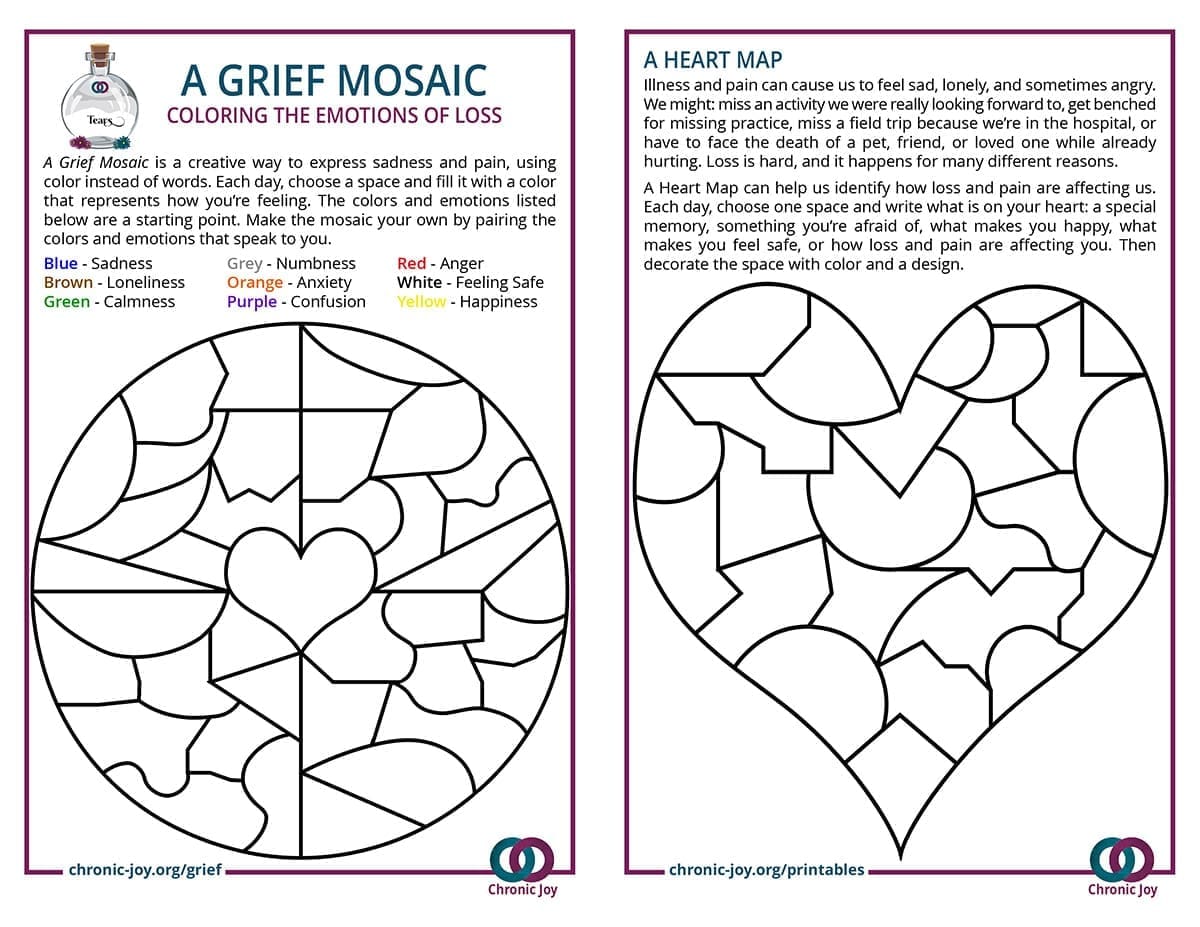
Grief Mosaic & Heart Map
A Grief Mosaic is a creative way to express sadness and pain, using color instead of words. Each day, choose a space and fill it with a color that represents how you’re feeling. A Heart Map can help us identify how loss and pain are affecting us.
Thank you for your message, very touching the 3 points about our emotions.